

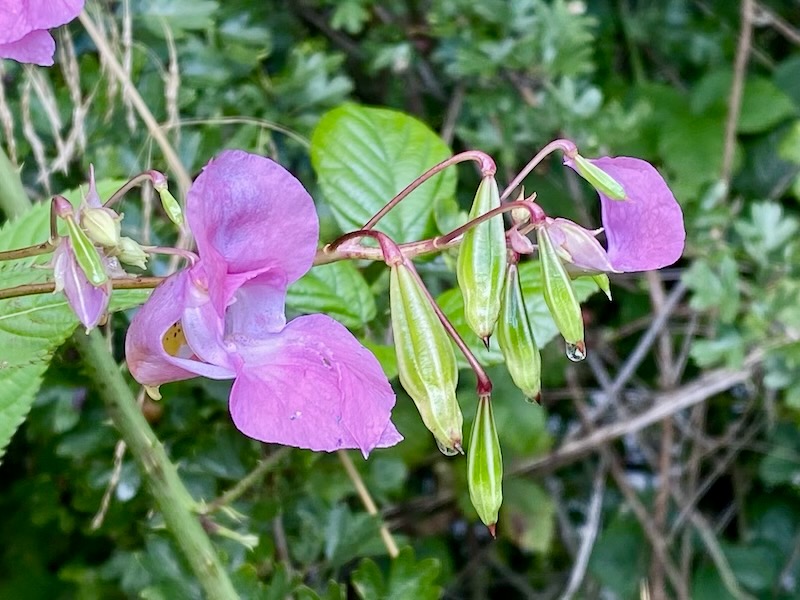
Himalayan Balsam – Impatiens glandulifera is known by many other names depending on locality:
- Gnome’s Hatstand (my favourite one)
- Kiss-me-on-the-mountain (not an instruction unless I know you well 😉 )
- Policeman’s helmet
- Jumping Jack
- Bobby Tops
- Copper Tops
- Nuns
- Indian Balsam
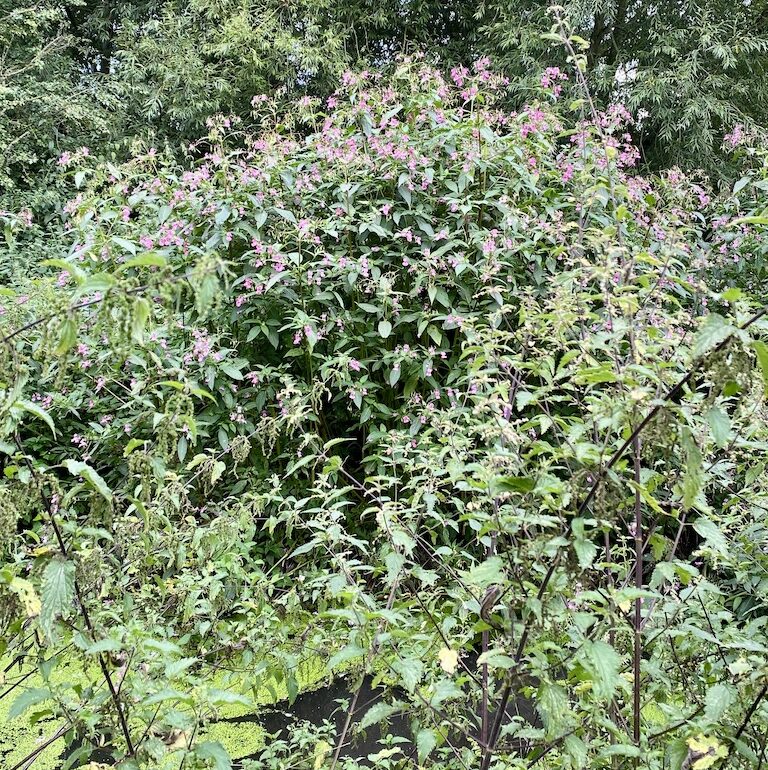
Himalayan balsam today is considered to be an aggressive, invasive weed but that wasn’t always the case. As a non-native, it was introduced into the UK in 1839 by the Victorians as an alternative to orchids who brought it over from the foothills of the Himalayas in India. The plants were grown in greenhouses and also used as an ornamental garden plant until one day, they escaped into the wild and now extensively invade our waterways and damp ground.
Visions of how the plant might have escaped brought a smile as I imagined it pulling itself out by its roots, lifting up its leaves and legging it over the garden fence, shouting: ‘Come on lads, now’s our chance!’
The plant is related to the East African Busy Lizzie who at a height of up to 60cm tall is positively dwarfed by it’s Himalayan cousin that can grow upto 3 metres in height! It’s flowers produce a high amount of nectar making it very attractive to bees and other pollinators, this does mean however, that our native flowers may suffer if overlooked by the insects as a result. There is much negativity written about Himalayan Balsam and the damage it’s causing to our UK ecosystem, however, it’s not all doom and gloom as the young shoots, leaves, flowers and seeds of the plant are all edible (see cautions below) and therefore a foragers delight. Why not help to curb it’s spread by foraging some for yourself?

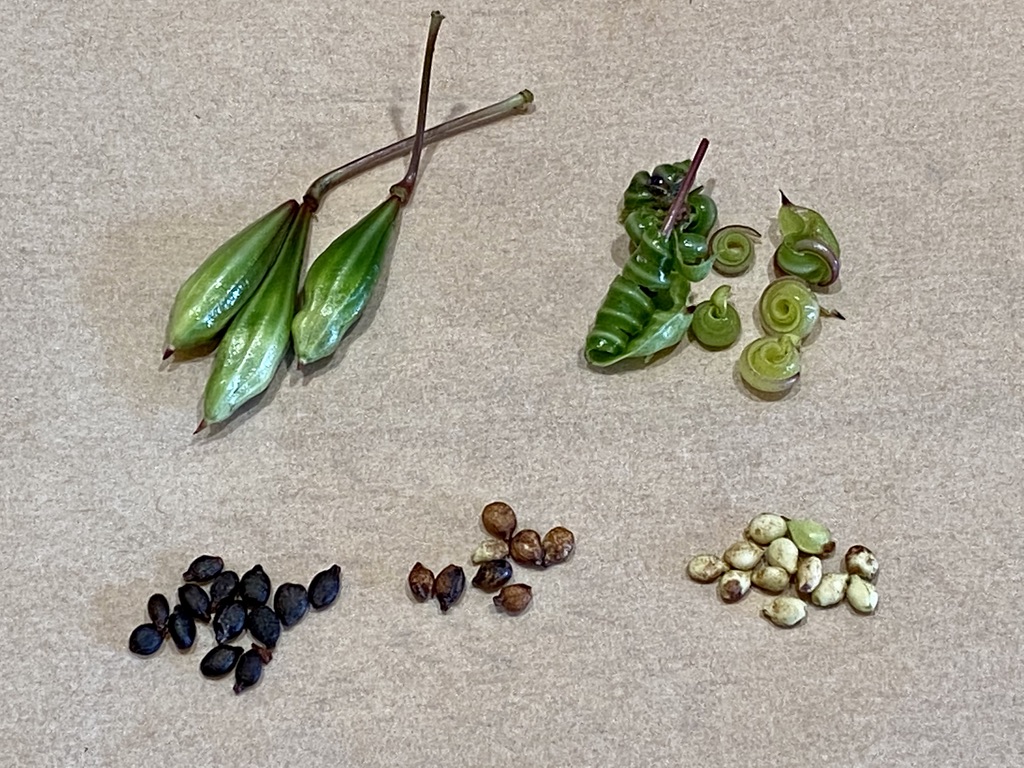
The seed pods cause great amusement amongst children and adults alike and I defy anyone not to squeak an ‘ooh!’ when the pods violently burst, hurling their seeds up to 7m away. Perhaps now it’s easy to understand how it ‘escaped’ into the wild. Each plant can apparently produce up to 2000 seeds. The seeds themselves which can be eaten raw in all their stages from pale, brown through to black when ripe, have a texture not too dissimilar to pine nuts, a great crunchy addition to salads. Some say the seeds taste similar to hazelnuts or walnuts though my experience is that their flavour isn’t really that distinct.
The seeds are a good substitute for those who have nut allergies and can be used in cakes, biscuits and bread as well soups, stews and are included in some Nepalese and Indian curry dishes. They can be roasted and ground to make flour though it’s not something I’ll be trying unless flour disappears off the shelves again and even then, I think I’d have to be pretty desperate or very time rich. Immature seed pods that don’t explode upon touch can be stir-fried and used in curries too.
The pretty flowers, also edible, can be added to salads – what a delight for the eyes and used in jam and jelly making. I’ve even caught sight of a gin recipe made with the flowers, a project for next year perhaps if I don’t manage it for this year. I shall let you know how I get on.
The young shoots and stems are edible too when cooked (see caution below)
Harvesting:
Harvest the flowers when they appear June to October and the seeds July to October. The easiest way to harvest the seeds is to gently place a food bag around a bunch of the pods without touching them if you can. Hold the neck of the bag tightly, gently shake and you’ll have the pods bursting like crazy but kept nicely contained within the bag. This video shows a seed pod in slo-mo exploding action.
WARNING: Under the Countryside & Wildlife Act it is an offence to plant or other cause Himalayan balsam to grow in the wild, help curtail it’s invasion instead by moderately foraging for your own consumption.
CAUTION: Himalayan Balsam Impatiens glandulifera cannot be mistaken for any other plant, however, the young shoots and stems contains high levels of minerals as well as a high concentrations of calcium oxalate. Calcium oxalate is broken down and leached out during the cooking process but it is recommended that they shouldn’t be consumed frequently or in great quantities. Comsumption of this plant is best avoided by anyone suffering from or are predisposed to kidney or bladder stones, gout, hyperacidity, rheumatism or arthritis.
I am not a qualified herbalist or botanist therefore I encourage you to do your own extensive research on Himalayan Balsam – Impatiens glandulifera or any plant you intend to forage and to be 100% certain that you have identified it correctly. New foodstuffs can cause allergic reactions so only ever try a small amount in the first instance and if you have any doubts whatsoever, leave well alone.

Ann founded Holistic Wellbeing in 2008 and today runs the business full time alongside her husband Jonathan. Ann specialises in the spiritual development of others on many levels. A teacher of Meditation, QiGong and Original Usui Reiki, Ann is an intuitive facilitator of healing through the mediums of Emotional Freedom Technique and spiritual practice.
Ann holds one to one therapy sessions, private meditation & QiGong classes for health and wellbeing as well as co-hosting weekly psychic evenings and psychic development courses, classes and workshops. She is also the events, promotions and advertising manager and is responsible for the day to day running of the centre. To find out more about Ann click here or contact her on: 01484 76722, email: Ann