

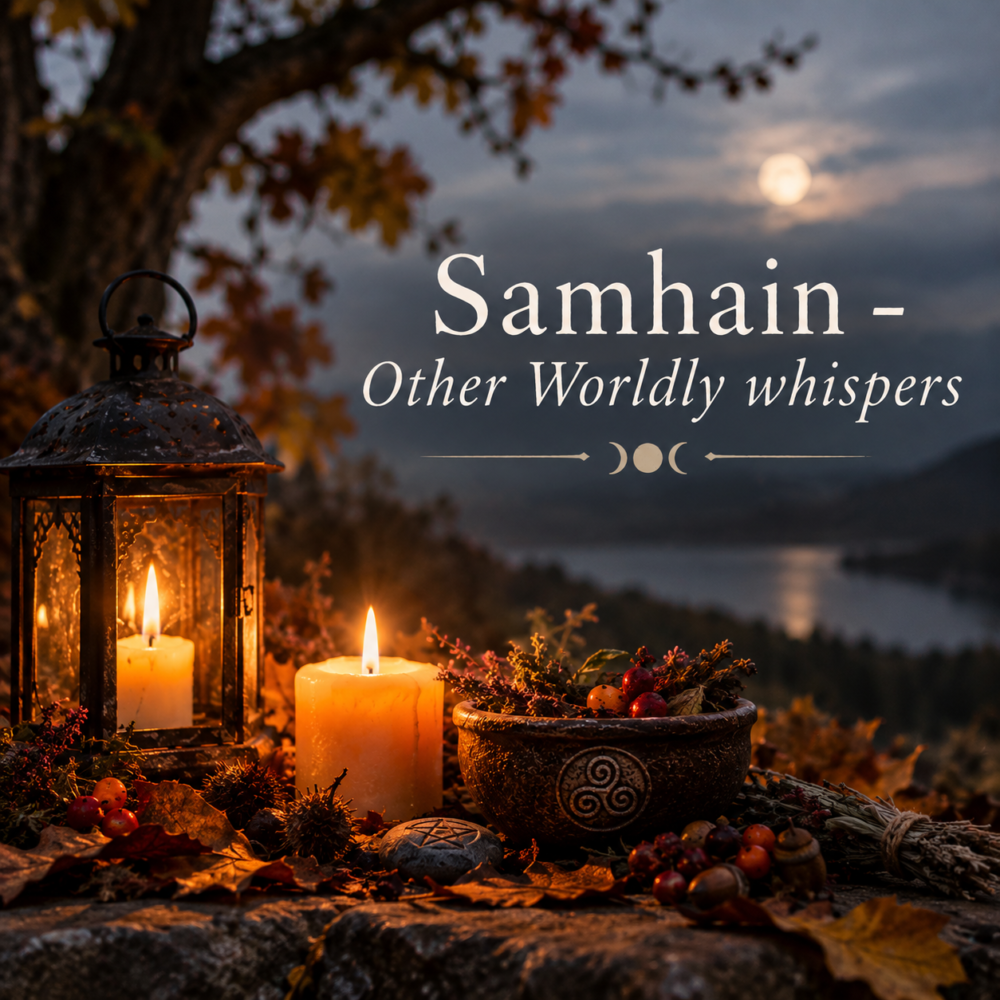
As October draws to a close and the nights grow longer, as the burnished shades of autumn begins its colourful transition into winter bleak, we see the return of Samhain, (pronounced Sow-in), marking the end of the harvest and the beginning of the darker half of the year.
Our ancestors believed that this was more than simply a change of season, it was a threshold where the veil between the familiar world of the living and the mysterious world of spirits and supernatural beings thinned, drawing both realms closer together.

In Irish folklore, ancient stories speak of the Aos Sí (the people of the mounds or the Fae as we may know them) being particularly active at this time, highlighting how strongly this time of year was associated with mystery, transformation and encounters beyond the norm.
With winter approaching, communities would gather together indoors, sharing food and stories of those who had made their transition as well as handing down traditions made through the generations.
As one of the four Fire festivals in the year, Samhain marks a quarterly turning point with bonfires lit as a symbol of protection. Divination, particularly concerning love and the future, were customary. In Scottish folklore, people used to place nuts on the fire to explore the fortunes of relationships. The way they burned was thought to offer clues about what lay ahead. Other customs involved pulling kale stalks or finding hidden tokens in traditional foods to discover something about a future partner or the coming year.
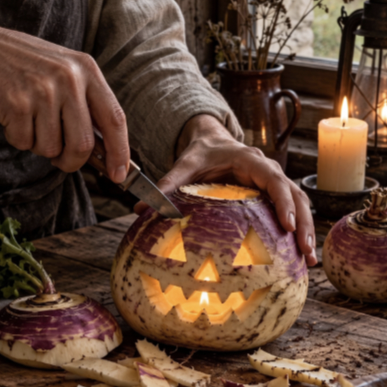
Long before pumpkins became popular, turnips were carved with frightening faces and lights placed inside them to ward off unwanted spooky visitors.
New Beginnings
In some circles, thought to stem from the traditional Gaelic seasonal calendar, Samhain is described as the Celtic New Year, where the year was viewed in two halves: the lighter summer months and the darker winter months. Samhain marked the transition between them. When the harvest was complete, the land began to rest and communities prepared for the hardships of winter. It was a time of withdrawal, reflection and renewal, when the old cycle had come to an end and the next was slowly beginning, much like a seed resting beneath the earth before the arrival of spring.
Trick or Treat?
How did it all begin? Well as I’ve learned, the tradition of trick-or-treating has roots in several centuries of British and Irish folklore and Christian customs, although the familiar version we recognise today developed much more recently, particularly in America.
Interestingly, there are two older traditions that are especially relevant: Souling and Guising.
Souling – remembering the dead
During the Middle Ages, particularly around All Saints’ Day (1st November) and All Souls’ Day (2nd November), poorer people would visit wealthier households asking for food or money. In return, they promised to pray for the souls of the householders’ deceased relatives, particularly those believed to be in Purgatory. They were often given small cakes known as soul cakes, traditionally marked with a cross.
The practice became known as Souling and over time children also took part, travelling from house to house asking for soul cakes and other gifts. Interestingly, this custom was recorded in several parts of England, including Yorkshire, Lancashire, Derbyshire and Staffordshire.
Guising – dressing up and performing
In Scotland and Ireland, another tradition developed known as Guising, from the word disguise.
Children and sometimes adults would dress up in costumes to hide their identities and visit neighbouring houses where they were expected to perform something in return for their treat.
This might involve:
- Singing a song.
- Reciting a poem.
- Telling a joke.
- Performing a little trick or entertaining the household.
In return, they might receive apples, nuts, fruit or coins.
How did it evolve into trick-or-treating?
The traditions of Souling and Guising travelled across the Atlantic with Irish and Scottish immigrants during the 19th century.
In America, Halloween became increasingly associated with mischief and by the early 20th century, some celebrations had become rather unruly! During the 1930s, organised community trick-or-treating began to emerge as a way of encouraging children to go door to door collecting treats rather than getting involved in destructive pranks. After the Second World War, the custom became increasingly popular, helped along by the post-war baby boom and the growing availability of commercially produced sweets. The phrase ‘trick or treat’ became firmly established in American popular culture during the early 1950s.
Isn’t it interesting how traditions evolve, borrowing and adapting elements from different cultures and beliefs over many generations?
Sources: English Heritage, History Channel.
If you’d prefer a quieter activity this Samhain, here are four suggestions of how you may…
Honour the Season
Candle of Remembrance – honouring loved ones.
You will need: A candle, a photograph or treasured keepsake.
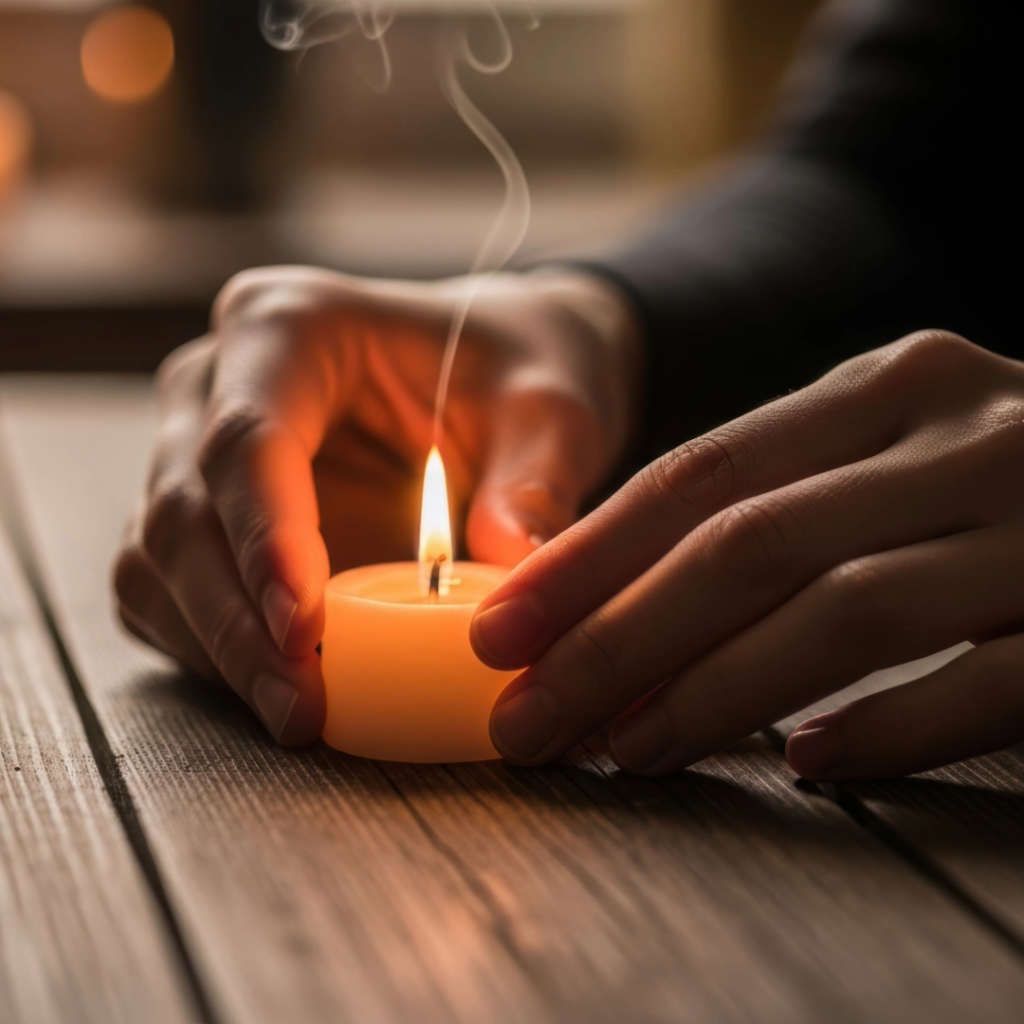
- Find a quiet place where you won’t be disturbed.
- Light your candle and take a few moments to become still.
- Bring to mind someone who has touched your life but is no longer physically with you.
- Remember something about them that makes you smile, or a lesson they shared with you.
- Silently offer your gratitude for having known them.
You might like to say:
‘Though you are no longer beside me, you remain part of my story. I honour the memories, the love and the wisdom you left behind.’
Sit quietly for a few moments before extinguishing your candle.
Letting Go
Samhain is often associated with endings and transitions, making it a lovely opportunity to consciously release something you no longer wish to carry.
You will need: paper, pen and a fireproof bowl
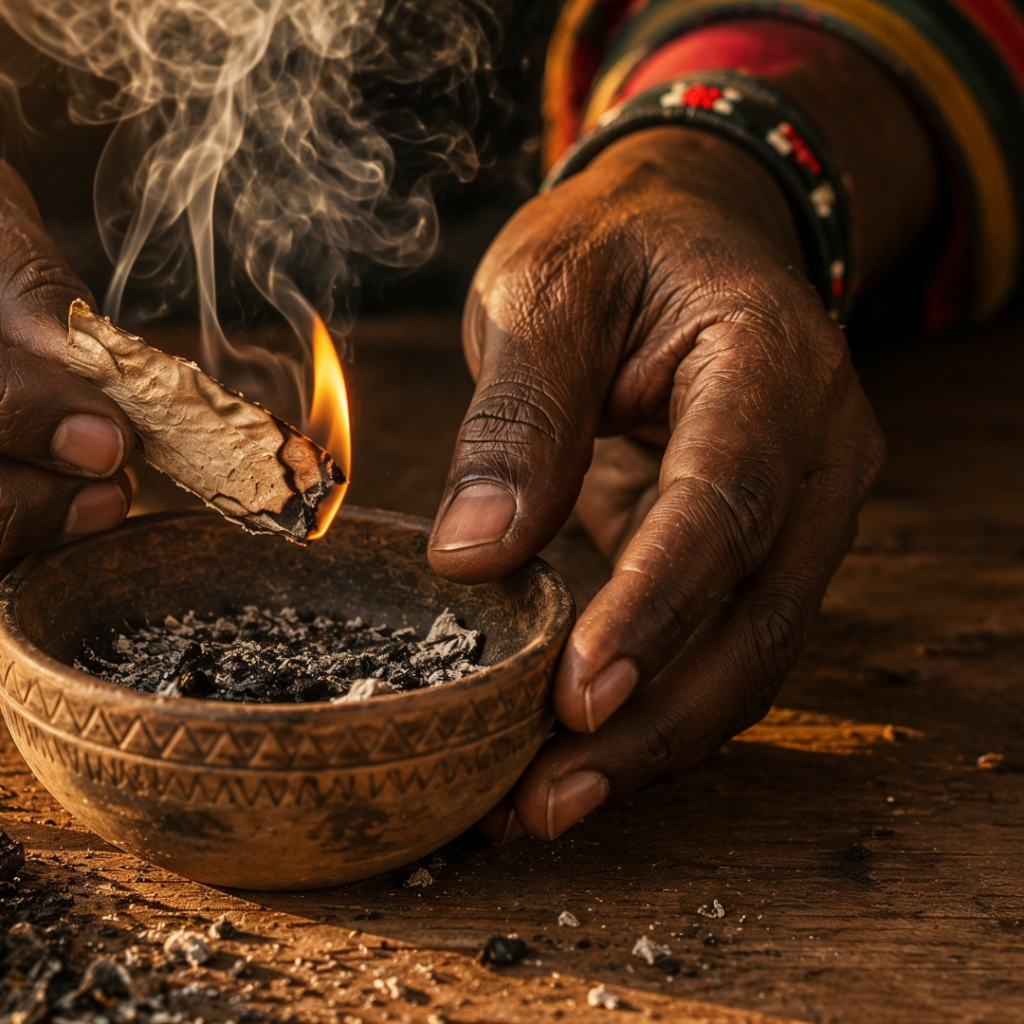
- Take a few quiet moments to consider what you would like to release.
- It might be an old habit, a limiting belief, a disappointment or something that has been weighing heavily on your mind.
- Write it down on your paper.
- Read it quietly to yourself and acknowledge what it has taught you.
- Safely burn the paper in a fireproof container, or tear it into small pieces and discard it.
As you do so, say:
‘I acknowledge what has been, I release what no longer serves me, and I make space for what is yet to come.’
The Bowl of Gratitude
Samhain is traditionally associated with the end of the harvest, so this is a lovely way to bring the symbolism of gathering in the harvest into our own lives.
You will need: A small bowl and some pieces of paper.
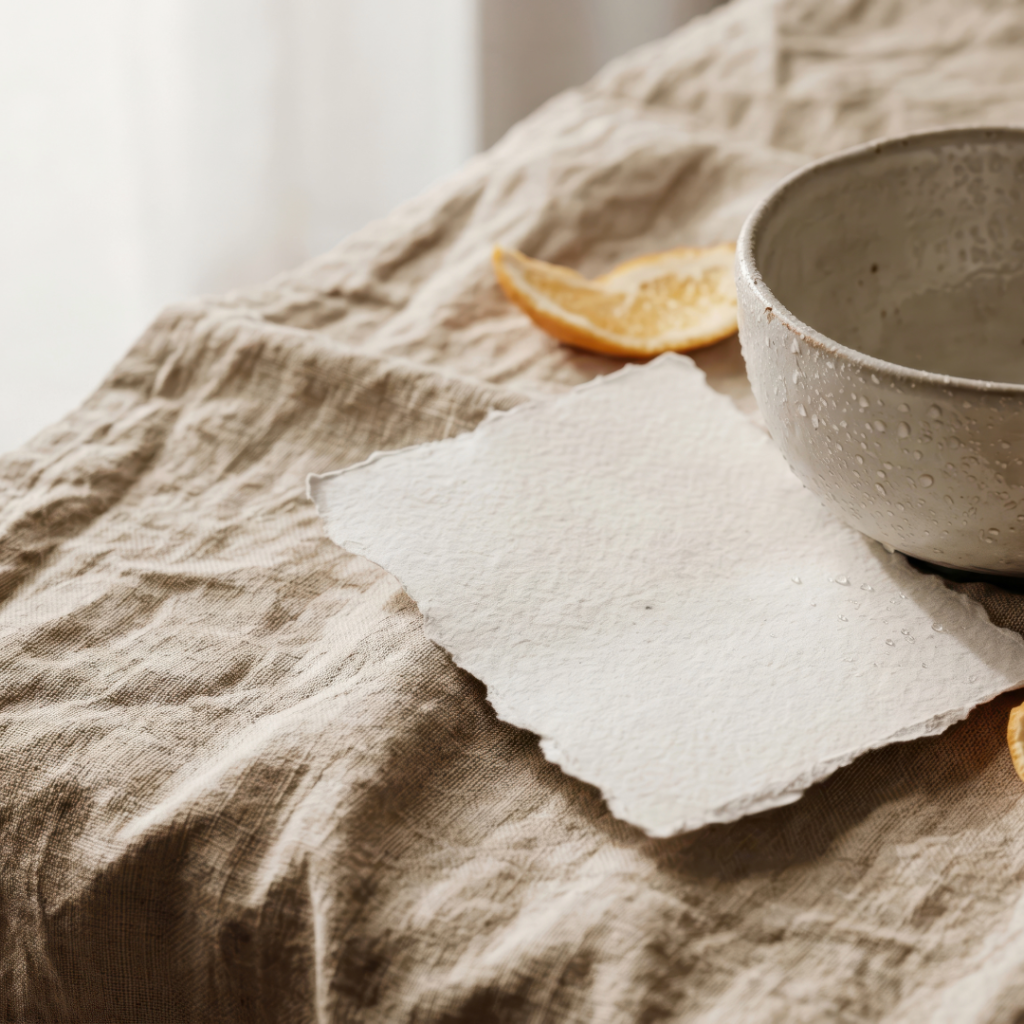
- Reflect on the past year and consider what you have gathered along the way.
- Write down things you are grateful for: experiences, friendships, lessons learned, personal achievements or moments of happiness.
- Fold each piece of paper and place it in your bowl.
- When you have finished, take a moment to read through them.
Remember that not every harvest is easy. Sometimes our greatest lessons come from the experiences we would never have chosen.
A moment of stillness
Perhaps the simplest ritual of all is to spend a little time reconnecting with nature.
- Take a gentle walk outdoors, noticing the changing colours, fallen leaves and quieter landscape.
- Find somewhere peaceful to sit, if possible.
- Take a few slow breaths and allow yourself to become present.
- Notice what nature is doing. Trees are releasing their leaves, plants are retreating and the earth is preparing for winter.
- Reflect on where you might benefit from slowing down, letting go or simply allowing yourself to rest.
You might ask yourself:
‘What is ready to fall away from my life, and what would I like to nurture in the months ahead?’
Perhaps this is the real beauty of Samhain. It offers us an opportunity to pause and reflect: a reminder that endings are not necessarily final. Sometimes they are simply the subtle beginning of something yet to come.
As the wheel turns and the darkness gathers, may we find comfort in the stillness, wisdom in reflection and gratitude for all those, past and present, who have helped shape our journey.
Samhain Blessings
Ann x


Ann founded Holistic Wellbeing in 2008 and today runs the business full time alongside her husband Jonathan. Ann specialises in the spiritual development of others on many therapeutic levels. A teacher of Original Usui Reiki and Beginner’s Tarot, she is also a published author. You can read more about Ann here
Ann founded Holistic Wellbeing in 2008 and today runs the business full time alongside her husband Jonathan. Ann specialises in the spiritual development of others on many therapeutic levels. A teacher of Original Usui Reiki and Beginner’s Tarot, she is also a published author. You can read more about Ann here
Find us on Facebook
Find us on Instagram: @holisticwellbeingcentre
Find us on Twitter
Find us on YouTube
6 thoughts on “Samhain – Other Worldly Whispers”
Beautiful blog Ann, very interesting, thought provoking. Thank you xxx
Thank you very much Alison, I’m delighted you enjoyed it 🙂 xx
Beautiful blog Ann, interesting and poignant. Blessings for this wonderful season 🙏 Thank you xx
Thank you so much Bev, blessings of the seasons to you too 🙂 xx
Lovely blog Ann 😀 thanks so much. Autumnal blessings to you xxx
So glad you enjoyed it Sophie, thank you and autumn blessings to you too 🙂 xx