Ylang Ylang Ylang Ylang Ylang Ylang
Article by Eileen Doody
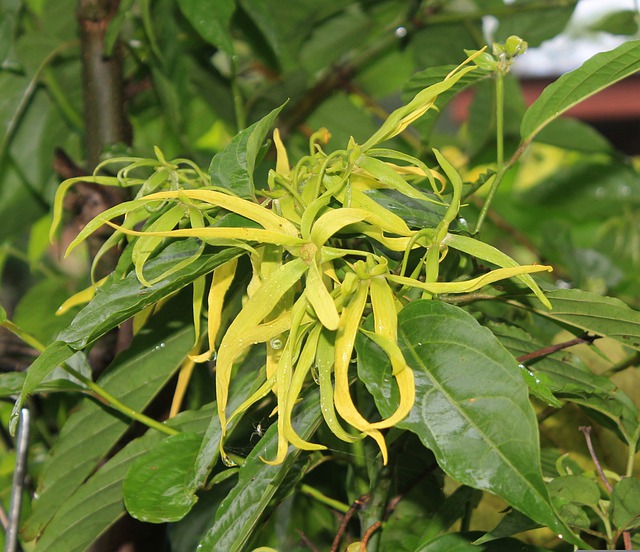
The name “Ylang Ylang” means “flower of flowers”. The essential oil is distilled from the flower of the tropical evergreen tree which grows up to 60 feet and is found in the Philippines, Mauritius, Sumatra and Madagascar. It is known locally as “the perfume tree” and it is a custom in Indonesia that beds are spread with the flower petals on wedding nights.
Ylang Ylang flowers are pink, mauve or yellow with the best oil being distilled from the yellow flowers which are picked in early summer and first thing in the morning. The best quality essential oil comes from the first lot drawn off during the distillation process and this is labelled Ylang Ylang. The colour of the oil varies from colourless to pale yellow to yellow gold. The remainder of the oil drained off later in the distillation process is normally labelled Cananga and is a poorer grade of oil.
Ylang Ylang has an unmistakable, sensual, heavy and very sweet aroma which can be quite heady. It has been called “poor man’s Jasmine” and is a very important and widely used oil in the perfumery industry.
Some people, particularly those with low blood pressure, do not particularly like its sweetness as it can make them feel nauseous and can give them headaches. It is best used in small amounts with other essential oils and it is contra-indicated if you have sensitive or inflamed skin.
Physical Healing
As with all essential oils, Ylang Ylang has antiseptic properties and can be applied diluted to an area where there may be infection, e.g. gut and intestines. Don’t let its beautiful scent fool you into thinking it’s just a nice perfume; it has been used by local inhabitants to lower fevers and fight infections such as malaria and typhus.
Being antispasmodic and anti-inflammatory, it is helpful for treating aches and pains. Its sedative and balancing properties can help to reduce high blood pressure and it has also been found to be beneficial for those with diabetes.
Ylang Ylang also has properties that relax the nervous system and lots of clinical research has shown that it is effective at reducing epileptic seizures. I have found this to be the case when using it in my practice with clients. This essential oil has a balancing action on the skin and so is helpful for both dry and oily skin and it also helps promote hair growth.
Emotional Healing
A tonic to the heart, Ylang Ylang is a euphoric oil that brings feelings of joy and enthusiasm. I have witnessed how helpful and supportive this oil is for clients working through issues of low self-esteem and poor confidence.
Its properties slow down breathing and over-rapid heartbeat (tachycardia) so it is an excellent oil to use for nervous tension, anxiety, panic, overwhelming fear and shock. When there is extreme anger or feelings of irritation and restlessness, Ylang Ylang can bring calm and support to the system. It is an antidepressant and an aphrodisiac and is notably helpful for those with sexual problems. It is particularly good for those who suffer with agoraphobia and I have used this effectively with such clients who felt it helped them turn a corner.
Spiritual Healing
As I already mentioned above, Ylang Ylang is a euphoric oil. Excellent for opening and lightening the heart, easing feelings of judgement, igniting passion and enabling us to become more flexible and confident that we may express ourselves and allow ourselves to fully inhabit and be all that we truly are.
Some blend suggestions:
Dry Skin
Blend together in 10ml* of base cream and massage into the skin twice daily.
Blend 1:
Ylang Ylang – 2 drops
Lavender – 2 drops
Geranium – 2 drops
Blend 2:
Ylang Ylang – 2 drops
Sandalwood– 2 drops
Mandarin – 2 drops
Blend 3:
Ylang Ylang – 2 drops
Patchouli – 1 drop
Neroli – 2 drops
Balancing The System
Blend together in 10ml* of pure unrefined and preferably organic vegetable oil or a lotion and massage into the affected area 2-3 times daily. Alternatively, you can massage this up your arms and across your collar bones or use as a body blend to massage into the whole body after your shower.
Blend 1:
Ylang Ylang – 2 drops
Mandarin – 2 drops
Neroli – 2 drops
Blend 2:
Ylang Ylang – 2 drops
Geranium – 2 drops
Bergamot- 2 drops
Blend 3
Vetiver – 1 drop
Ylang Ylang – 2 drops
Bergamot- 3 drops
High Blood Pressure or Epilepsy
Inhale directly from the bottle or place 1 drop on a tissue and inhale 3-4 times in the day. You can also use a body blend above or use 1-2 drops of Ylang Ylang diluted (in one tablespoon of cider vinegar or milk or base oil or vodka) along with other essential oils in your bath 2-3 times per week.
Important Notes
Essential oils may be toxic to some pets so keep your diffuser and essential oils away from them
Some essential oils have contra-indications so please consult a good aromatherapy book (written by a qualified aromatherapist) before use.
Essential oils are toxic to aquatic life so please do not flush them down the toilet or the sink. Instead, wipe away any surplus essential oils in cream or diffuser with some kitchen paper and put in the bin.
The above blend dilutions are suitable for teenagers and adults.
*5ml = 1 teaspoon.
Holistic Wellbeing has a wide range of essential oils you can view when visiting the Centre. I am always happy to answer any questions so do feel free to get in touch.

Eileen qualified in Aromatherapy Massage with The London School of Aromatherapy in 1994 and is a member of the International Federation of Aromatherapists. She went on to train and qualify in Reflexology, Indian Head Massage, Reiki and CranioSacral Therapy.
She also uses flower and tree essences as a support to the psycho-emotional aspects of treatments when needed. Eileen is passionate about holding space for others in their healing and spiritual journeys. Her website is www.eileendoody.com. Her Facebook page is Eileen Doody Therapies.
Ylang Ylang photo credit: Maya A.P. from Pixabay.