

Return of the Divine Feminine Return of the Divine Feminine Return of the Divine Feminine Return of the Divine Feminine Return of the Divine Feminine Return of the Divine Feminine
During the break on my last Reiki Master/Teacher course, Sadie, Robin and I got into an interesting conversation about Friday the 13th. The really interesting part I’ll come on to shortly but here’s a bit of background information first which you can skip by clicking here if you’re not a trivia nerd like I am.
The fear of Friday the 13th is known as paraskevidekatriaphobia and the fear of the number 13 is known as triskaidekaphobia which I’m sure you already knew. Personally I’d be more afraid of having to pronounce the phobia name than the phobia itself!
Independently, Friday and the number 13 have been deemed unlucky in their own right.
That Friday Feeling…
Those who don’t have to work weekends generally look forward to it, however…
- It was believed that Eve offered the forbidden fruit to Adam on a Friday.
- Those condemned to death were hanged on Fridays which led to the day being known as Hangman’s Day.
- In the old Catholic tradition, every Friday was a day of penance.
- Jesus was crucified on a Friday but paradoxically it was named Good Friday and not a day of bad luck.
- In his book Canterbury Tales, Geoffrey Chaucer wrote “and on a Friday fell all this mischance” which enforces the superstition that Friday is an unlucky day.
The number 13…
- In Christian traditions the Last Supper had 13 attendees with Judas Iscariot being the 13th.
- In Norse mythology, Loki the god of mischief, trickery and deception was the 13th guest at a dinner party which he proceeded to ruin by plunging the world into darkness. I’m guessing they didn’t have the chance to eat first. Even today some people believe in the superstition that having 13 guests at a dinner party will lead to one of them dying within the year. Check that hygiene rating 😉
- During the Middle Ages, the number 13 was linked to witches and witchcraft with the belief that a coven consisted of 12 members and the devil himself was the 13th. Keep this one in mind for later on.
- In Nordic mythology and numerology, the number 13 is also seen as unlucky, as 12 symbolises completeness while 13 is regarded as irregular or disruptive.
- The 13th card in the Tarot is the ‘Death’ card.
- The number is avoided by many hotels – no 13th floor or room 13 and even some airlines don’t have a row 13.
Then we have the combination of Friday and the number 13 which is then deemed doubly unlucky. It was certainly unlucky for:
The Knights Templar who were arrested and executed on Friday 13th October 1307 following the orders of King Philip IV of France.
And of course there are the Friday 13th American horror films of which twelve were made. I wonder why they never made a 13th?
In our experience we do know that Friday 13th was lucky for Jack the cat and if you’ve not read his story, you can find it here.
Frjádagr Hinn Brettándi – roughly translates as Friday the 13th in Old Norse.
Now back to the conversation my Reiki students and I were having and this is where, for me, things start to get really interesting. Sadie shared a very interesting perspective on Friday 13th. Wise women, often seen as healers, midwives, or spiritual leaders in their communities, viewed Friday the 13th as a very powerful day for women. It was the day of the goddess, a day of celebration, rather than misfortune, where women would gather together to honour their Divine Femininity and to:

- remember the Goddess within
- honour their creativity
- share their wisdom
- empower each other
- support each other
- nourish the soul
- celebrate the beauty of womanhood
- honour the cycle of birth, death and rebirth
Thirteen is the yearly number of moon cycles which as women, our cycles flow with. Many women find that they are very connected to the feminine energy of the moon and are affected by her phases. If a woman’s menstrual cycle aligns with the phases of the Moon, she will typically bleed during the New Moon and ovulate during the Full Moon. The 13th of the month often falls at the midpoint of the lunar cycle, symbolising the balance between death and rebirth. This represents the transition between the New Moon, associated with shedding and release (death), and the Full Moon, associated with ovulation and creation (rebirth).

Friday
- Friday has long been associated with the Roman goddess of love Venus. In Latin, Friday is called dies Veneris which means Day of Venus.
- Frjádagr is an Old Norse word meaning “Day of Freyja” or “Day of Frigg,” a day associated with love and is the origin of the modern English name for Friday. Freya and Frigg are Norse goddesses:
Freyja: meaning Lady, is the Norse goddess of love, beauty, fertility and war. She is associated with passion, prosperity, and magic, particularly the seiðr, a type of Norse sorcery.
Frigg: meaning Beloved, is Goddess of marriage, motherhood, and domestic life. She is also associated with wisdom, foresight, and protection.
Both are associated with fertility and motherhood. Both embody aspects of the divine feminine, such as love, protection, and wisdom. Both have distinct roles and attributes within Norse mythology yet over time, their identities have became somewhat intertwined, leading to debates about whether they were originally separate deities or different aspects of the same goddess.
So, Friday 13th was celebrated with feminine ceremonies, rituals and cycles until the shift away from the matriarchal society. Patriarchy dominance began from around the Roman conquest when Roman rule brought in patriarchal legal systems and the suppression of local religious practices, including goddess worship. Roman law reduced women’s autonomy, emphasising male authority in families and society.
Christianity brought in under Roman rule ensured the church hierarchy was male-dominated and the emphasis on Eve’s role in the “Fall of Man” diminished women’s spiritual authority. Female deities and leaders in pagan religions were demonised or forgotten.
Gradually over time women’s roles became more restricted to domestic and supportive functions, with fewer opportunities for leadership or independence and the feudal system entrenched patriarchal power through land ownership and inheritance laws favouring men.
In ancient times, a menstruating woman was said to epitomise divine and magical powers. She would be sought out for her for wisdom and revered for her intuitive messages. During ovulation, she was regarded to be at her most powerful. Her ability to receive, hold and create new life was something to be celebrated. As society became more patriarchal though, women were gradually made to feel ashamed of their cycle.
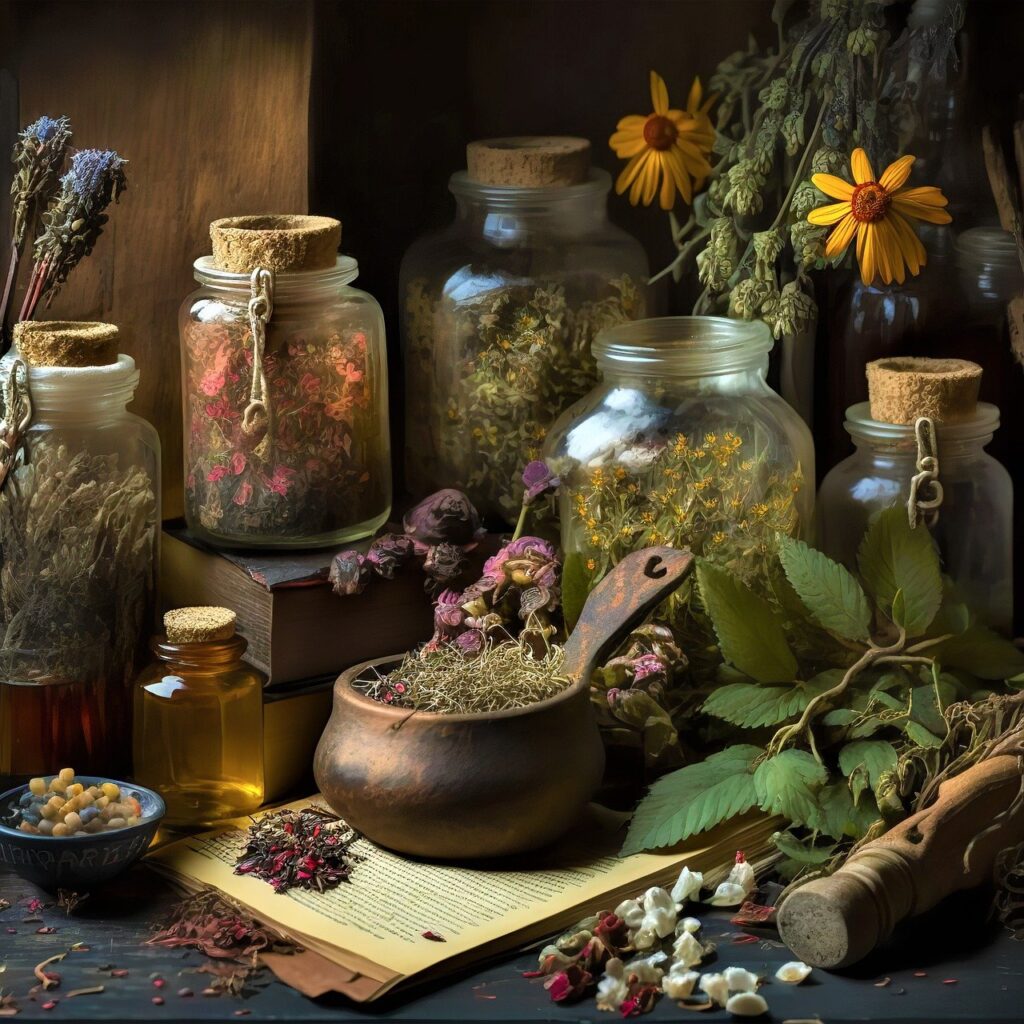
Then came the witch hunts and more suppression of female power in the 16th to 17th century. As patriarchal systems grew, they often sought to suppress the power of women and their spiritual practices, branding wise women as witches and sacred days as dangerous. In mediaeval Europe, menstrual blood was often associated with witchcraft or evil and medical and religious texts perpetuated myths that menstruation was harmful or a sign of female inferiority.
The persecution of women as witches further diminished the influence of women in spiritual and healing roles. While the primary motivations for the witch hunts included fear of the supernatural, religious zeal and efforts to control societal deviance, there was also another underlying factor at play, which Robin pointed out…
Women who owned land or were economically independent were especially vulnerable, as their wealth and autonomy threatened the patriarchal order. Accusing these women of witchcraft could justify their removal and allow male relatives or neighbours to claim the property.
During the witch trials, gatherings of women were demonised and symbols of feminine power like the moon and the number 13, were cast as evil. Both Friday and the number 13, once revered, became symbols of fear and superstition. Friday the 13th was no longer safe to celebrate.
Today, many women in tune with their ancestors and ancient roots are returning to the tradition of celebrating Friday 13th as the day of the goddess. They are reclaiming their right to gather and celebrate their divine feminine energy, they are reigniting the goddess within and once more, honouring Frjádagr hinn þrettándi with their divine and magical powers.
If you’d be interested in a magical gathering on Friday 13th May 2025 to explore some of the old ways using oils, herbs, crystals, candles, affirmations, manifesting, healing and wisdom-sharing in a sacred space, then drop me a line and if there’s enough interest I will create and deliver a deeply healing and empowering evening to honour our ancestors and the divine feminine.
If you’ve enjoyed this article, then please do drop us a comment below, we do love to hear from you.
May the blessings of the ancestors be upon you.
Ann x
Ann founded Holistic Wellbeing in 2008 and today runs the business full time alongside her husband Jonathan. Ann specialises in the spiritual development of others on many levels. She is a Funeral Celebrant, a teacher of Meditation, QiGong and Original Usui Reiki, Ann is an intuitive facilitator of healing through the mediums of Emotional Freedom Technique and spiritual practice.
Ann holds one to one therapy sessions, private meditation & QiGong classes for health and wellbeing as well as co-hosting weekly psychic evenings and psychic development courses, classes and workshops. She is also the events, promotions and advertising manager and is responsible for the day to day running of the centre. To find out more about Ann click here or contact her on: 01484 76722, email: Ann.
Find us on Facebook
Find us on Instagram
Find us on Twitter
Find us on YouTube
Image credits: MythologyArt, Pixabay, canva, Clker-Free-Vector-Images, DebbieEM, Pixabay
2 thoughts on “Return of the Divine Feminine”
Hi Ann,
Mel and I would be interested in Friday 13th Divine feminine.
Would it be in the evening, or a whole day?
Love Ali xxx
Hi Ali,
Great to hear you’re both interested. It would be just for the evening 😊x